Scientists Identify 'Oral Spirochetes' In The Brains of Dementia Patients (And How They Got There)
For years, the brain was considered a sterile, protected organ. That understanding has been shattered. A groundbreaking 2019 study in Science Advances confirmed the presence of Porphyromonas gingivalis, a keystone pathogen in chronic periodontitis, within the brains of Alzheimer's patients.
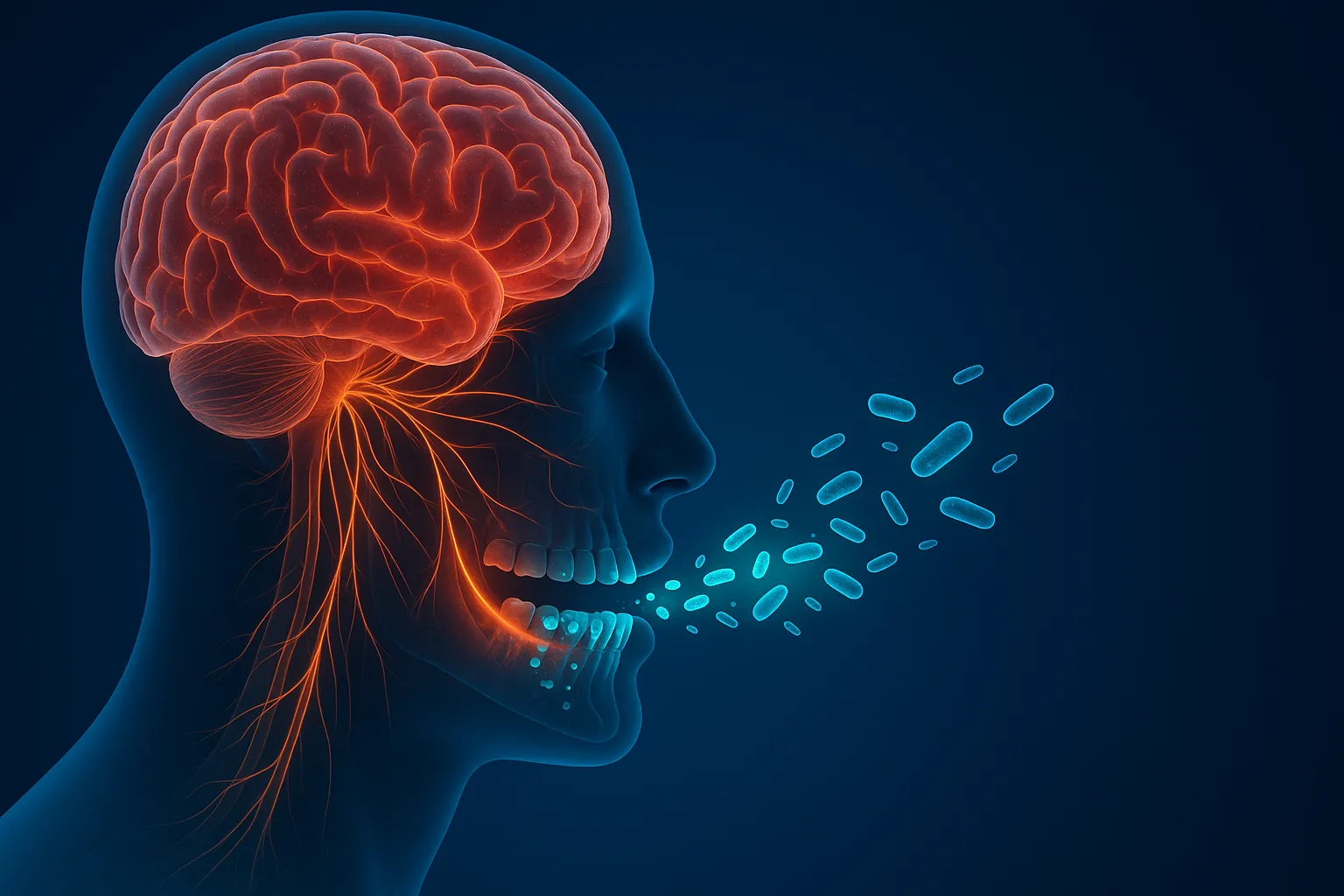
The Highway: Bacteria use cranial nerves as a direct path from your mouth to your brain tissue.
How does a mouth bacterium travel to the brain? The leading theory is via two pathways: either through the bloodstream after entering through bleeding gums, or by migrating up through cranial nerves, such as the trigeminal nerve, directly into the brain tissue.
Once there, it's not a passive bystander. P. gingivalis is believed to trigger neuroinflammation, a process that leads to the neuron death and cognitive decline characteristic of Alzheimer's. This isn't just a correlation; many scientists now believe it could be a causal factor. This is a far more serious issue than damaging your tooth enamel from aggressive brushing.
This discovery has shifted the focus of preventative health. Protecting your brain may start with protecting your gums. A new protocol, detailed in a short documentary, explains how a simple nighttime ritual can help "seal" the gums against these bacterial invaders. Discover the protocol before it's too late.